




The idea of Solar mobility and electric cars
Map of public charging stations in Slovenija
Another map of charging stations
We tried the idea of Solar mobility in practice - electric vehicles are charged by photovoltic power plant that produces enough energy for 30000 km per year for our electric cars - Superpiki, R5 elektro, Dacia Sandero Elektro and sport electro car Bolt. By connecting the power plant to the grid the project has been finished end of May 2009 proving that solar mobility is possible. If we could have done it with limited sources and only family budget in a garage, societis and corporations could do it faster, better and cheaper. But there is not enouh will....
The enhancement of solar mobility is its incorporation in smart grids by V2G technology . Our car Bolt is already capable of V2G and can return 250 W of power back to the grid durinng the peak hours. We didd it to demonstrate that it is alreaady possible...
We also convert vehicles to electric drive for different companies around the World and help with many electric transport projects.
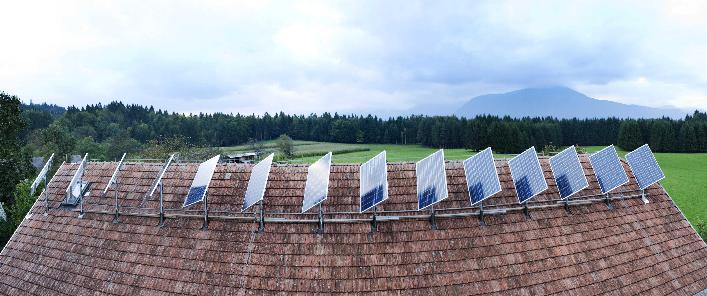
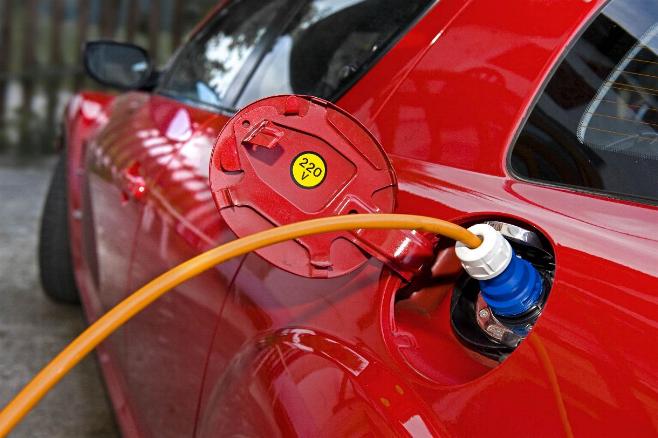
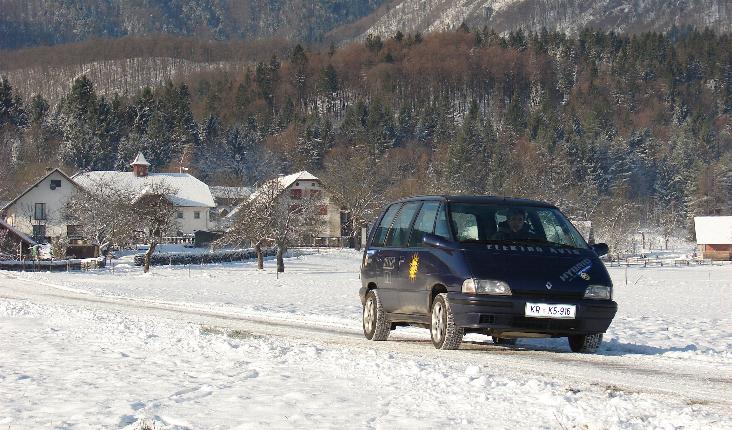
We have four electric vehicles being capable of driving from 100-350 km per charge on pure electric power. The cars are charged at home 3kW photovoltaic power plant
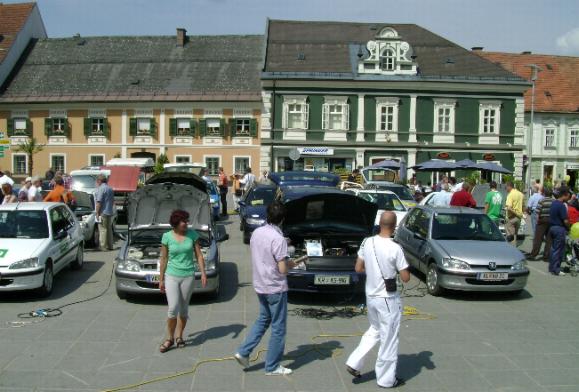
E Espace attending
Eurosolar
event in Volkermarkt Austria May 2008. It climbed a mountain pass Jezersko
(1000 m of elevation) and drove 120 km without charging!
When observing heavy Ljubljana traffic, I found out that more then 90% of the people poluting the city being stuck in traffic jams and driving mostly up to 40 km per day could drive electric. To prove it and to show the people that it is possible with today's technology to drive completelly pollution free, the idea to convert Renault Espace has been born in 2006. Why Renault Espace? Becuse it is made of plastic and due to that fact lightweight and will not rost, so it can last quite many years. Because it has enough space for batteries and hybrid power plant. Because it is very cheap to buy - it has virtually no value. The last reason is because it is big - a kind of little van. Whay should an electric car be big??? Actually it is batter to use a small car, but today's fashon are big cars and most people are afraid that it is dangerous to drive small cars even in cities. Actually driving a small car in Slovenija is dangerous as driving habits in our country are more or less of "wild west" style, what is also proved by the highest dead ratio per capita on streets in the whole European union. It became my project end of 2006 and made first electric km in august 2007. We have rebuilt and refitted by LiPo batteries the first Slovenian electric car R5 Elektro in October 2008 and built a PV powerplant in spring 2009. E Espace has been retired in april 2009 and its parts and LiPo battery used in a new sport car project - the Bolt that hit the road in September 2009. In 2010 we have mainly be doing projects for different companies around the World: conversion of BYD F0 in China (Yuneec), conversion of SMART cars in Belgium (Isolants Hallet) and making a pre prototype of Chebelica car in Slovenija (Oprema Ravne).
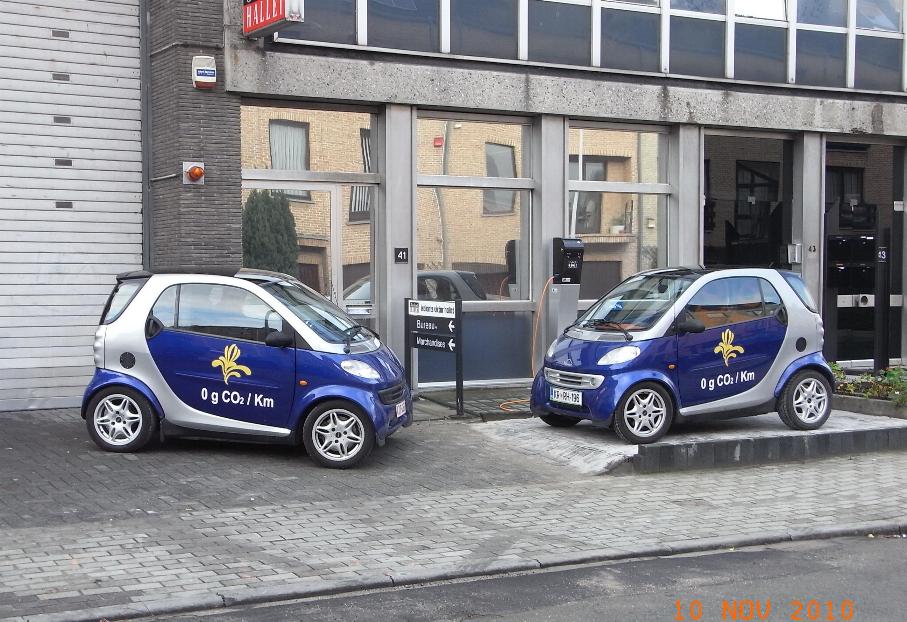
Two converted SMART cars in Brussels
E-espace was fitted with a 40 kW 3 phase 192V electric motor controlled by frequency regualtor. It also has a capability of regenerative braking up to -30 kW. It has been done by Slovenian company Stoja d.o.o. that has supplied the same motors to Singapore where they move their city buses. They also built the first Slovenian EV in 1992. Energy is stored in 250 kg of special Kokam Lithium - polimer batteries supplied by company ANET d.o.o. from Ljubljana . The total available stored energy is 40 kWh what allows the car high range up to 200 km on pure electric power and speed up to 120 km/h. To incease the range a 12 kW diesel generator has been added, powered by bio diesel 2 cylinder direct injection 4 stroke engine. Additional power supply is provided also by 200 W of solar cells on the roof of the car supplied by company Actinia (more for visual image then real effect on performances). At home we have built a 3 kW solar photovoltaic power station to fill our cars completelly emission free. Many additional devices had to be installed like electric power steering pump, electric vacuum brake pump, auxilliary heater for winter, DC DC coverter etc. Unfortunatelly conversion to electrics took a lot of time, efforts and money, but in large scale it would be possible and not too expensive. It is really a shame that oil and political lobbies prevent any development in this way -:(
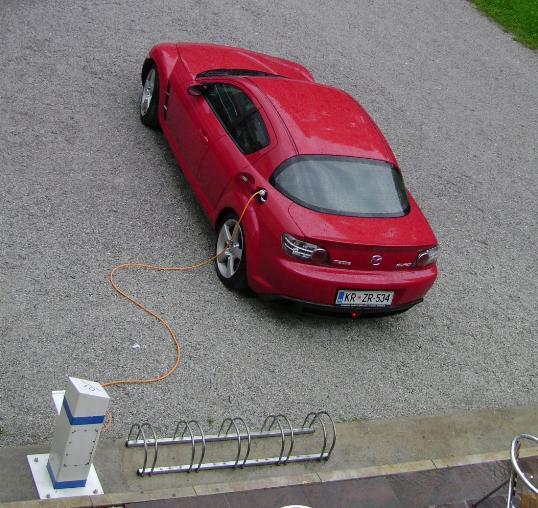
Bolt sport electric car recharging in Ljubljana
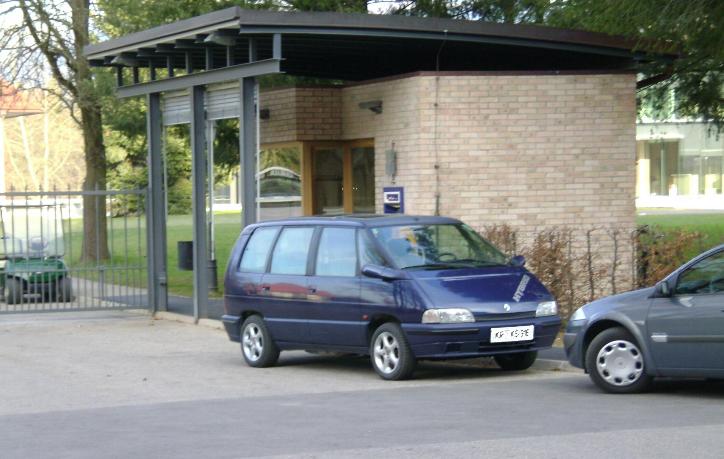
E Espace on first electric drive -
attending Brdo conference Climate change: an opportunity for growth 16th of
November 2007
We also drive Toyota Prius we bought as a crashed car and repaired it. It is a nice car and more people should buy it instead of classic cars of the same price and size. But the batteries are far too small as what they do is just to store the energy that is regenerated by braking. The whole energy stored in Prius is just 1,4 kWh, but due to the software that does not allow total charging and discharging, only about 1 kWh could be used. As all 12V power that powers all devices on a car is produced by a DC-DC converter and stored in a 12V battery, we aded some solar cells that charge the 12V system directly, so we spare some more energy as DC-DC converter needs less power to charge 12V system. Anyway it is still a gasoline powered car with better efficiency, but not what it could be with more batteries and capability of pure electric drive. In october 2009 we have finished PHEV Prius project with Li-Po batteries (additional 2 kWh) and we produce it in small series since 2013
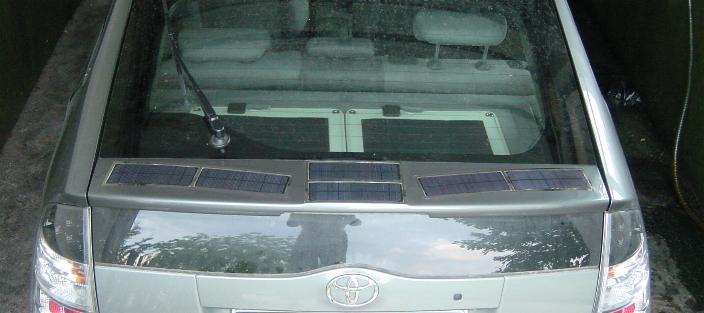
Prius with solar cells installed in spoiler and trunk Latest improvment is
conversion to PHEV (oct.2009)
Solar mobility - solar charged driving
If you want to see what is it all about -
The movie
WHO KILLED THE ELECTRIC CAR
Vehicules electiques - French site
Everything about photovoltaics